Cause and Effect Identification
Reading Comprehension worksheet for Grade 4 · Updated 22 Oct 2026
 Download PDF
This resource was created by TeacherGPT. You can sign up to create your own or customize this one.
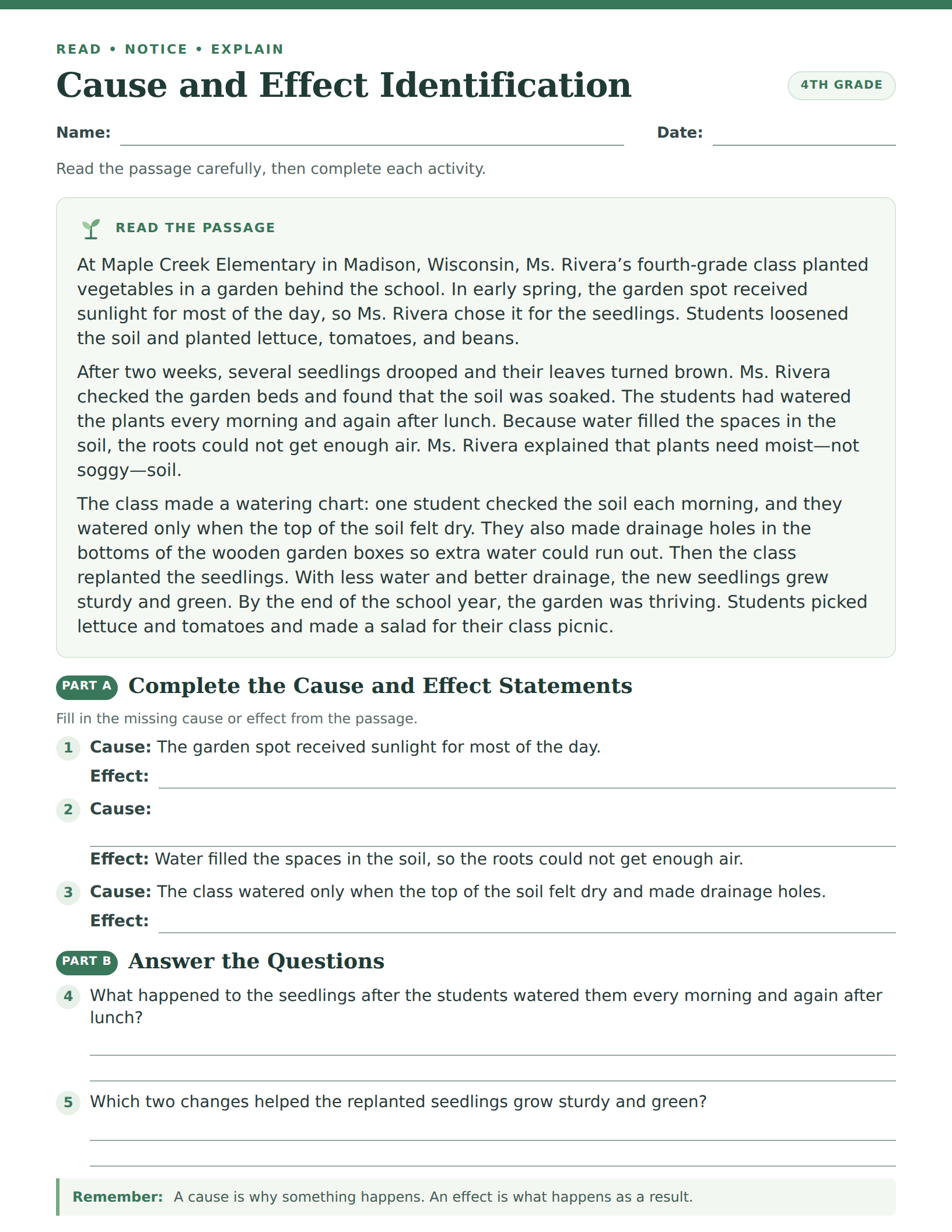
About this worksheet
Students read a passage about a school garden, complete cause-and-effect statements, and answer questions about why seedlings drooped and what helped them grow.
- Reading Comprehension, Grade 4
- 5 questions
- Prints on US Letter paper
- Free to download as a PDF or PNG and print for your class
What's on the worksheet
READ • NOTICE • EXPLAIN
4TH GRADE
Read the passage carefully, then complete each activity.
READ THE PASSAGE
At Maple Creek Elementary in Madison, Wisconsin, Ms. Rivera’s fourth-grade class planted vegetables in a garden behind the school. In early spring, the garden spot received sunlight for most of the day, so Ms. Rivera chose it for the seedlings. Students loosened the soil and planted lettuce, tomatoes, and beans.
After two weeks, several seedlings drooped and their leaves turned brown. Ms. Rivera checked the garden beds and found that the soil was soaked. The students had watered the plants every morning and again after lunch. Because water filled the spaces in the soil, the roots could not get enough air. Ms. Rivera explained that plants need moist—not soggy—soil.
The class made a watering chart: one student checked the soil each morning, and they watered only when the top of the soil felt dry. They also made drainage holes in the bottoms of the wooden garden boxes so extra water could run out. Then the class replanted the seedlings. With less water and better drainage, the new seedlings grew sturdy and green. By the end of the school year, the garden was thriving. Students picked lettuce and tomatoes and made a salad for their class picnic.
PART A Complete the Cause and Effect Statements
Fill in the missing cause or effect from the passage.
1. Cause: The garden spot received sunlight for most of the day. Effect: ___
2. Cause: ___ Effect: Water filled the spaces in the soil, so the roots could not get enough air.
3. Cause: The class watered only when the top of the soil felt dry and made drainage holes. Effect: ___
PART B Answer the Questions
4. What happened to the seedlings after the students watered them every morning and again after lunch? ___
5. Which two changes helped the replanted seedlings grow sturdy and green? ___
Remember: A cause is why something happens. An effect is what happens as a result.
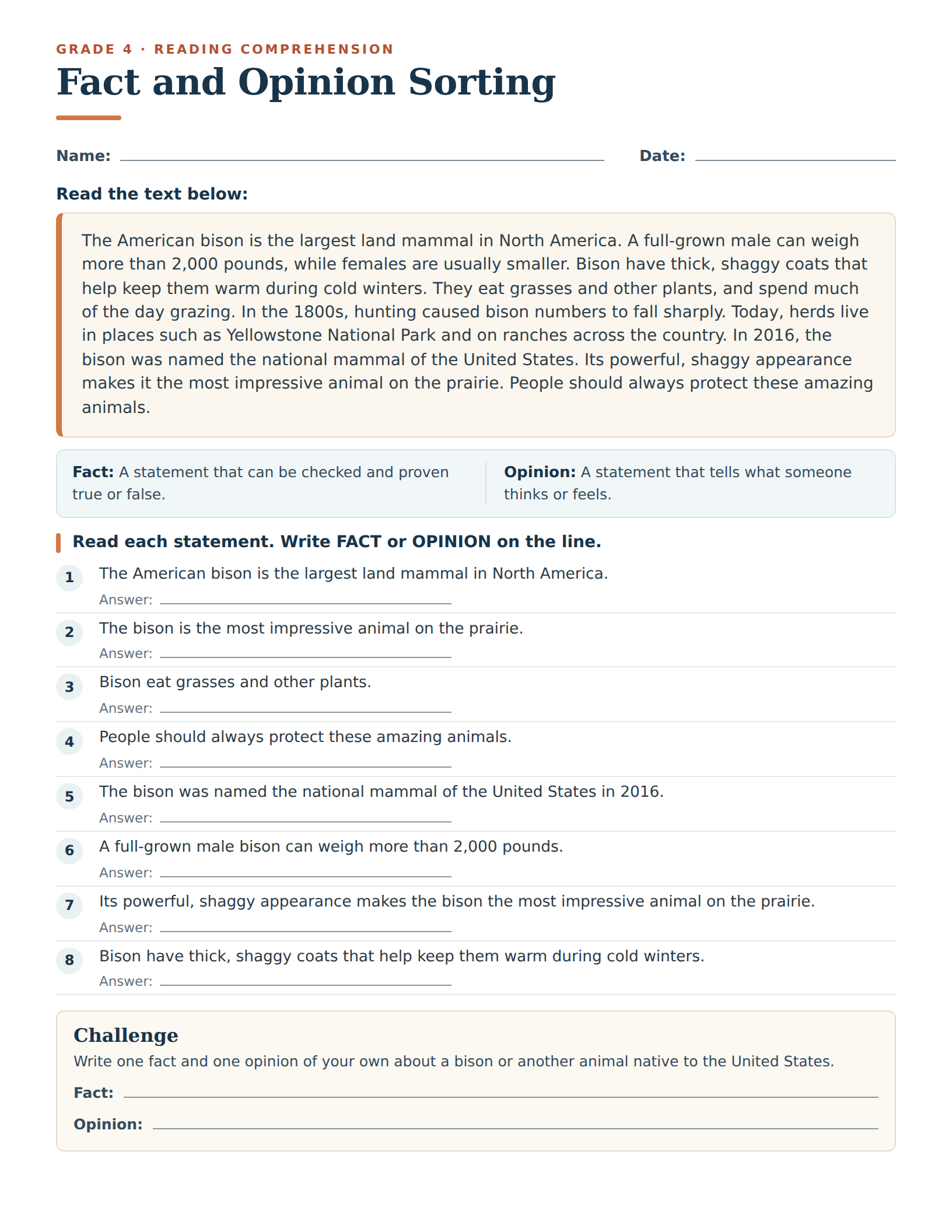
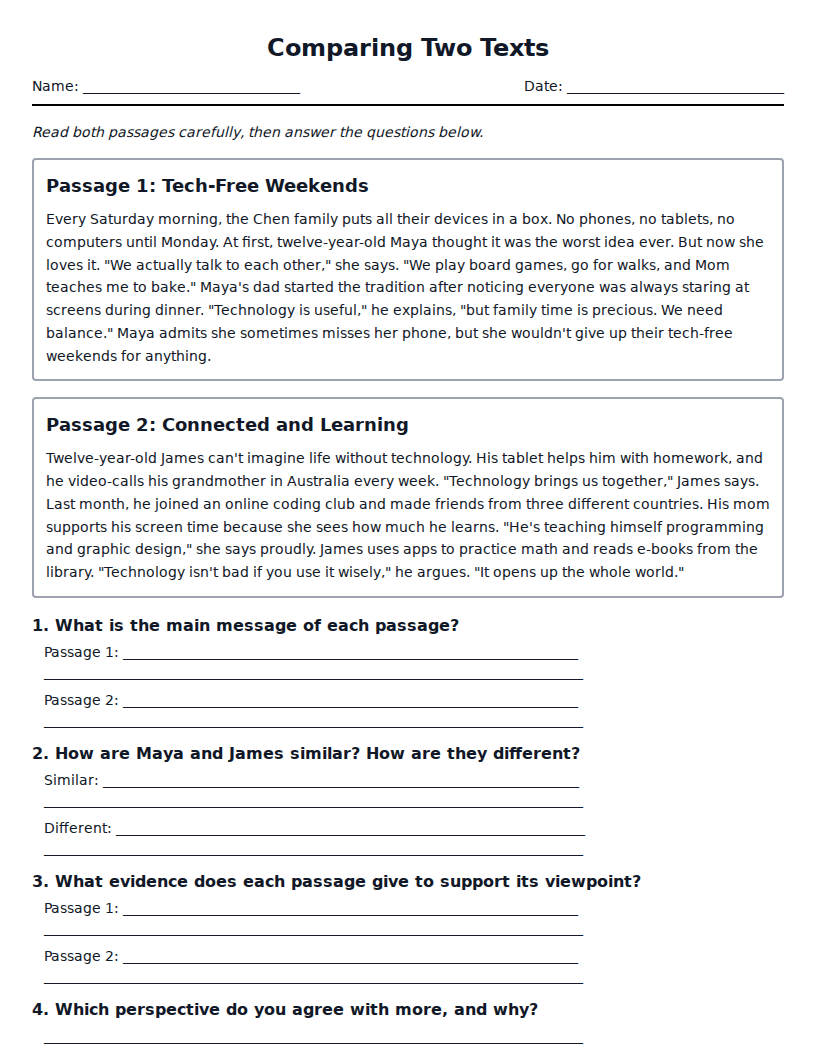
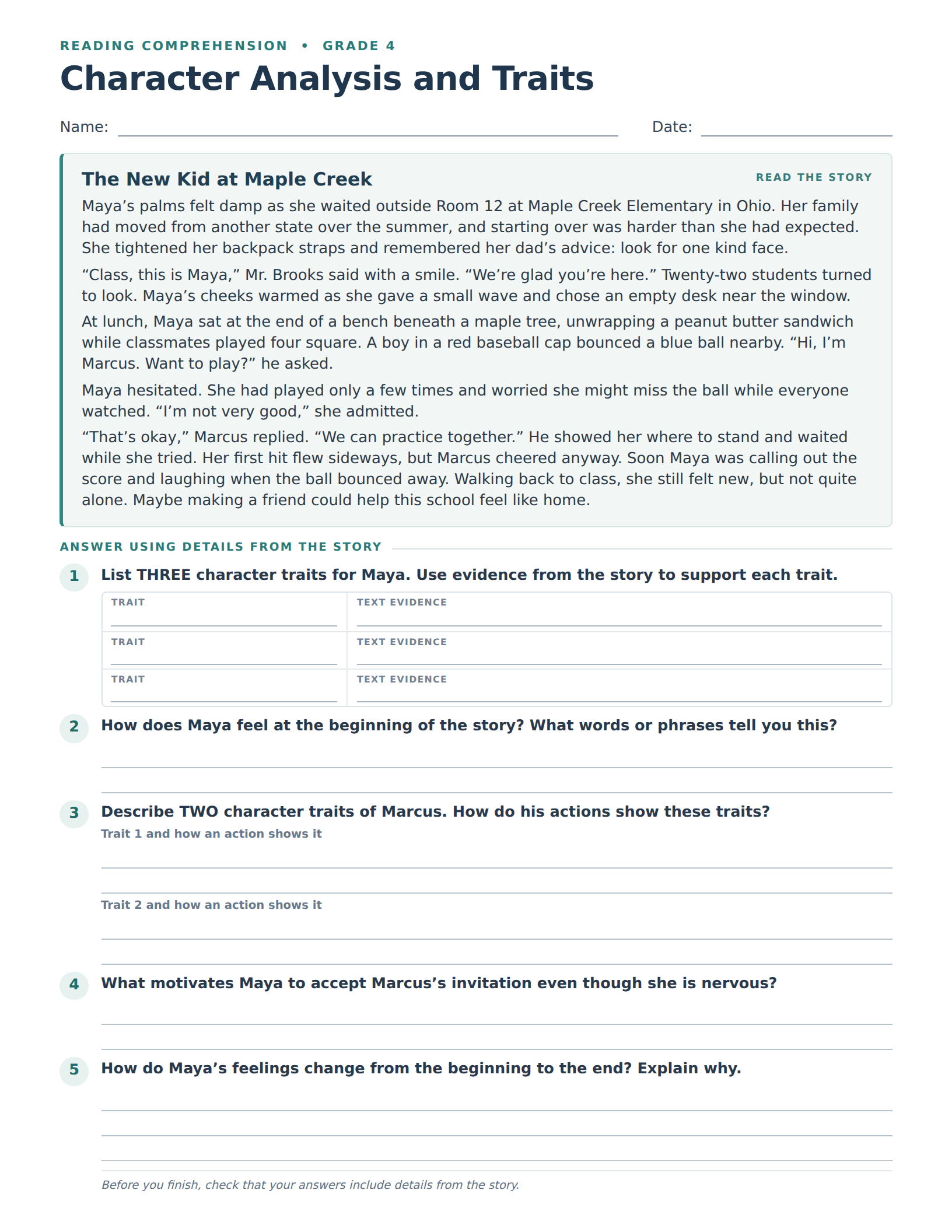
More reading comprehension worksheets
Explore more
Reading Comprehension by grade: Kindergarten· Grade 1· Grade 2· Grade 3· Grade 5· Grade 6· Grade 7
Other Grade 4 worksheets: Grammar and Punctuation· Writing· Cloze Reading· Fractions· Decimals· Multiplication· Addition· Subtraction· Division· Algebra· Geometry· Measurement· Money